

This month, I read The Peasant Queen by Aston E. Dorow, a fantasy retelling of the Biblical story of Esther. As I’ve always enjoyed the story of Queen Esther and I knew the romance would take place between a married couple, I looked forward to seeing what Mrs. Dorow could do with the story.
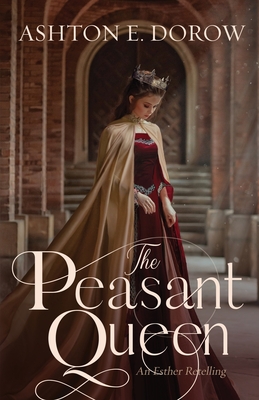
The Synopsis (Taken from Goodreads):
A king haunted by memories of his past…
A young woman fighting against her future…
Torn from her home and all that is familiar, Arabella of Caelrith finds herself as the unwilling bride of King Rowan of Acuniel–the man whose vengeful war stole her family.
Bitter and confused, Arabella struggles to find her place in this new life. That is, until someone tries to kill the king.Despite repeated warnings to stay out of the matter, Arabella investigates the attempt on Rowan’s life, and his parents’ long ago murder, unconcerned with the potential cost of her interference. But when tragedy strikes, the seriousness of the situation becomes all too clear. Is the price of knowing the truth higher than she is willing to pay?
When the fate of the kingdom and all that she holds dear is at stake, will Arabella have the courage to stand up against the evil endeavoring to destroy them all? Did God really abandon her when He left her to this fate? Or was she put in the king’s palace… for such a time as this?
My Review:
The Peasant Queen is a unique retelling of the Biblical Esther story with enough twists and turns to be different and keep you wondering what will happen next. Arabella, a peasant girl who hides her true blood as being one of the people the kingdom of Acuniel are warring with, is picked to enter a contest to see who will be the bride of King Rowan, the vengeful and unpopular king of Acuniel. Rowan marries Arabella solely to keep her from the grasps of one of his lecherous noblemen, but has no desire to open his heart to love anyone again, especially after the murder of his parents by Arabella’s people. As the story goes on, Arabella has to keep putting her trust in the Lord, that He knows what He’s doing, as she becomes more and more embroiled in the dark political plots aiming to take out Rowan–and her. And soon she discovers these plots are not originating from her homeland–but from someone nearby, right beneath their noses.
I’ll admit, the prologue and first couple of chapters threw me off. We’re introduced to Arabella and Rowen ten years before the start of the story, when Arabella develops a crush on him. Yet the next chapter, ten years later, Arabella hates him? I felt the story would have worked better without the prologue. The first chapter from Rowan’s point of view also threw me off because we get Arabella’s chapters in first-person, but Rowan’s in third. I got used to it as I went along, but it did startle me for a moment. I also was confused about who was speaking when in that chapter. Although that was the only place I noticed that problem, who was speaking and what was going on could have been clearer.
However, once I got past the bumpy start, the story became better. Arabella was a relatable, well-developed character, and she wasn’t a holier-than-thou person because she was styled off of Esther. Mrs. Dorow did a good job of making her a good, Christian girl with struggles. She lost her temper, said things she shouldn’t have, complained at times, and struggled with wondering why God let things happen–but she always went back to God, repented for her shortcomings, and put her trust in Him. Rowan was also well characterized–he wasn’t your typical charming or icy male lead, but could actually be dislikable at times, as well as lovable. Yet I could see why he acted the way he did, and still rooted for the two to be together. His journey to trusting in the Lord was also compelling and well-written.
The side characters were a little weaker, solely because they didn’t get much time–the two strongest side characters were the villain and another of Rowan’s advisors (who was probably my favorite character). Arabella also had a few friends and a minor rival towards the beginning of the book, but they all sort of faded into the background as the story went on (save for one who had a bit of an arc at the end). I sort of wish some of these characters would have had a little stronger roles and characterizations, but I understand why they didn’t, as the plot didn’t require them.
The romance was subsequently a fun enemies-to-lovers type romance. Neither of them cared much for each other at the start of their marriage, but by the end, both truly loved each other and learned love comes through trust and the best kind of love comes from loving and trusting the Lord first. As for other character relationships, we do see Rowan have a semi-fatherly/sonly relationship with one of his older advisors which is a sweet addition, as well as his deep friendship and dependance upon one of his other advisors. Outside of those and the main romantic relationship, however, the other friendships/rivalries are again, not dwelt on or developed much.
The dialogue was pretty well done, with a touch of historical setting coming into play with some of the phrasing (“Nay,” for example, instead of “No.”) which was a nice addition.
However, sometimes the narrative itself would bog me down with a few grammatical things. For one, I felt there were an overuse of ellipses, and sometimes they were in the oddest of places which threw me off. Other times, the narrative felt a little stifled (“He did this, she did that” sort of thing) but those were rare. There was also a typo I caught where a character’s name was spelled wrong, but I’ve seen that happen in other books too, so it’s not a huge thing (especially since it only happened once) but maybe one more proofread through the book would have been nice just for the grammatical issues. But this is the author’s first book, I believe, so you’ve got to give her credit, too! (And a disclaimer–I do have a personal pet peeve with ellipses, so it could just be me, but I can’t remember the last time I read a book with so many of them as this one possessed. Not necessarily a bad thing, just–not my thing. Hyphens are more my thing–I probably overuse them, haha! See what I mean?)
There were also a few things plausibility wise which made me stop and think. Rowan’s sudden decision change at the end I wish would have been influenced more by logic and emotion, not just what seemed to me to be emotion. (Like him investigating the villain’s room himself, like Arabella did, and realizing the truth, would’ve been neat.) And then Arabella’s life is saved by someone throwing a dagger at another person–but it’s never clear who threw the dagger? Was it Rowen, or one of the knights? There could’ve been a cool plot twist there, too, where one of the side characters came to help out, but–it was just never mentioned? And of course, the note I referred to in the beginning with the prologue–Arabella had a crush on him, then ten years later hated him because of the war he caused, etc. It just didn’t make any sense for me as to why I was told she had a crush on him in the first place. Just open the book with him disliking him and then my mind doesn’t have to go “oh she liked him and now she hates him but she still kinda likes him?” Made things a little complicated.
The worldbuilding was done well for the plot. Most of it took place within the castle of Acuniel, and the castle was well developed with a secret passageway, gardens and private chambers, dungeons, and the like. The political worldbuilding was also simple, but done well, with the war between Acuniel and Arabella’s people a huge part of the political machinations. The reasonings behind the war were clear, as were the effects it had on the common population. It’s not a massive political or setting type of worldbuilding, but simple and suitable for the plot. And it’s nice to have a book where you don’t have to memorize ten country names and five people groups and all these nobles and factions for once (even if I like those books too!)
In all, this sweet and simple Esther retelling had great leads, a compelling romance, and lasting message–to put our trust in God, and He will direct our paths, for He has great plans for us. I hear The Peasant Queen also has a sequel, which I probably will look into reading in the future. For now, I’d recommend this story to Middle-Grade, Young Adult, and Adult readers who enjoy sweet romances, Biblical retellings (but with twists that make them different), and non-magical Christian fantasies.
Rating: 4/5 Stars
Thank you for reading my review. Have you read this book, or do you plan to? What did you think of it, if you have? Do you have a favorite Bible story you’d like to read a retelling of? Let me know in the comments below. God bless! ~ Kay Adelin
Discover more from Kay Adelin
Subscribe to get the latest posts sent to your email.

 Kay Adelin
Splendid review, Kay!! I’ve see this book before, but was never convinced I should read it. Perhaps I’ll give it a go!!
LikeLiked by 2 people
Thank you so much! 😊 I would definitely recommend giving it a try, it’s pretty good!!
LikeLiked by 1 person
Great review! Esther retellings are the BEST. I need to read this one!!
LikeLiked by 1 person
Thank you! Yes, you should! I’d be curious to see what you’d think of it!
LikeLiked by 1 person