

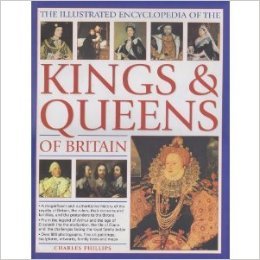
Hey everyone! I’m back (albeit a little late) with my book review for the book I read in July, The Illustrated Encyclopedia of the Kings and Queens of Britain by Charles Phillips. You know you’re kinda obsessed with something when you actually read an entire encyclopedia on the subject, and this encyclopedia was definitely a fun non-fiction read for me!
As with all my non-fiction book reviews, this review will only cover my personal thoughts, not any content.
Personal Review
As someone very interested in history, and using historical figures and events for inspiration for my own writing, I was super excited when I got this book. I started this book with the intention of growing my knowledge of medieval England and the kings and queens around during that time, since many of my stories are medieval fantasy and I love the medieval time. Before reading this encyclopedia, I could recite all the kings from William the Conquerer to King John from memory–now I can pretty much recite from William the Conquerer to Edward VII.
The encyclopedia was really nice for a brief overview of just the kings and queens of England and the major events during their lives. The ancient and medieval kings and queens of both England and Scotland each had about a page or two dedicated to them, and from the War of the Roses onward, a few had pages dedicated to larger happenings during their lives. Queen Elizabeth I was the first of a few select kings and queens who had a large section dedicated to them, and her section covered everything from her potential marriage partners and relationship with Mary, Queen of Scots, to her court life and her last days. Then, the Stuarts were covered, the first to unite the thrones of England and Scotland together, and in-between their rule, the brief civil war where parliament took control under Oliver Cromwell. After the Stuarts came the Hanoverian kings, the most famous of them being George III, and then another large section was dedicated to Queen Victoria and her doings. Finally, it ended with covering the modern day royals.
This encyclopedia was published in 2006, so it does not have some of the more recent news of the royal family, and if someone is looking for an in-depth book about a particular king or queen, or even about a prince/princess who should have ruled but did not, this book is not the right one for you. However, for someone who just wants a light, working knowledge of some of England’s history and kings and queens, this encyclopedia is a very light and informative read, with plenty of cool illustrations to boot!
I will list a few notable characters and events which I learned about from this encyclopedia that I may look more in-depth into, and that may interest someone else who enjoys this type of history to either read this encyclopedia for a bit of knowledge about it, or even research these events or people themselves!
Ancient England Interesting People and Events:
King Arthur – Mythical or real? The debate as to his existence and identity has gone on for years. What is known is the legends associated with him are folklore, although the man himself may have existed or been based off many different men.
Edward the Martyr, Aethelred II The Unready, and Aelfthryth – I’d never heard of these Anglo-Saxon royals until this encyclopedia. Edward and Aethelred II are the great, great grandsons of the famous Alfred the Great, and Aelfthryth is Aethelred II’s mother, and Edward’s stepmother. Anyone who knows about political or royal drama can guess what happened next based off of Edward’s moniker. Aelfthryth presumably arranged for the sixteen year old Edward to be murdered in order to place her own son, ten year old Aethelred on the throne. Apparently it was a terrible decision all around, as Aethelred II made a series of bad decisions, earning the name the Unready.
William the Conquerer’s eldest son, Robert Curthose – For someone who always assumed ancient kingdoms passed to the eldest sons, well, supposedly, William the Conquerer did not exactly do this with his sons. William fought multiple times against his firstborn, Robert, who rebelled against him, and supposedly in the end left Normandy to Robert and England to his second son, William Rufus. Some of these battles (and especially what caused Robert to rebel in the first place) might be interesting to further research. In the end, it seemed more likely that Robert may have been cheated of the crown by his brother William Rufus (and subsequently by Henry, William I’s youngest son).
The White Ship Tragedy – Only briefly covered in this encyclopedia, the White Ship Disaster was a very intriguing event as it caused the first succession crisis in England. Henry I’s only legitimate male heir, William Adelin drowned in the White Ship accident of which only a single butcher survived. My pen name’s surname was actually inspired by him and this incident.
Interesting People During the Plantagenets Reign:
Eleanor of Aquitaine – Indisputably one of the most powerful women in the medieval times, Eleanor of Aquitaine is a fascinating queen to read about. She married two kings and gave birth to three (if one counts Henry, the Young King), and technically divorced her first husband (although back then they called them “annulments”.) Finally, she even encouraged her sons to revolt against their father and tried to join their campaigns herself, and was rumored to have killed her husband’s favorite mistress as well. Not somebody you wanted to make an enemy out of!
Richard the Lionheart – Richard is a fascinating historical figure to read about and is often compared positively compared to his dastardly brother, John. Richard is best known in the legends of Robin Hood and His Merry Men and Sir Walter Scott’s Ivanhoe, in which both Robin Hood and King Richard center. A really cool (although not entirely historically accurate) movie about Richard the Lionheart is The Crusades (1935) directed by Cecil B. DeMille. One of my all time favorite movies–and it’s free on Youtube!
Arthur of Brittney – As the son of King John’s older brother, Arthur of Brittney should have received the crown after Richard the Lionheart’s death and fought for his rights. However, he was captured by John and presumably murdered by him at age fifteen or sixteen.
Isabella of France – Another powerful woman, the wife of Edward II, was not a woman to mess with. After her husband’s series of affairs, she took a new lover, and with him, managed to force her husband from the throne and killed him in a gruesome way, putting their fourteen-year-old son, Edward III, on the throne. In retribution, when he grew older, Edward III exiled Isabella and imprisoned her lover.
Interesting People and Events Among the Scottish Rulers:
Macbeth – How much history did Shakespeare include in his play based off this historical king? Well, Macbeth was a real Scottish king who did kill Duncan I, however, the two were not king and general, but, in fact, rivals, and Duncan was killed during battle. Also, contrary to Shakespeare’s play, Macbeth had a pretty stable and long rule, only eventually being killed by Duncan’s son Malcolm eighteen years later in yet another battle.
First Scottish War of Independence – William Wallace and Robert the Bruce are two well-known characters in this historical event, one with a sad but inspiring end, the other with a victorious one, his descendants eventually coming to unite Scotland and England under their rule. Many of the Scotch battles and events during this war, including Robert the Bruce’s victory at Bannockburn, are interesting to learn about.
The Black Dinner – Although not mentioned in the encyclopedia, the historical event The Black Dinner took place during the reign of James II of Scotland when he was just a child. Being only six when he came to the throne, several rival factions competed for power, including a family known as the Douglases. The family had split into two rival factions, the Red and Black Douglases, and it’s believed James Douglas, leader of the Red Douglases, (and possibly his son William) conspired with a few other prominent families to remove the Black Douglases from power.
The events of the Black Dinner took place when two of the Black Douglases, the sixteen year old duke and his younger brother, were invited to dine with ten-year-old James II. According to the story, while they ate, a black bull’s head, the symbol of death, was paraded before them, and the duke and his brother were dragged out amid protests of the boy-king and killed. Years later, James II repeated the events of the Black Dinner by promising safe conduct to William Douglas, James Douglas’s son, to his castle, where he killed him. The famous novelist George R. R. Martin apparently wrote a scene that was inspired by this historical event in his novel A Song of Ice and Fire.
The Raid of Ruthven – While only briefly touched upon in the encyclopedia, the Raid of Ruthven was a very interesting occurrence in the life of King James VI of Scotland (and the future King James I of England). When he was sixteen, he was kidnapped by Protestant nobles fearing he would be led astray by his Catholic friend, in the Raid of Ruthven. Ten months later, James managed to escape and ruled in his own name afterwards.
Interesting People and Events During Lancastrian and Yorkish Reigns:
Owain Glyndwr, Henry “Hotspur” Percy, and Henry IV – Henry Bolingbroke overthrew the last Plantagenet king, Richard II, and became Henry IV. His reign was plagued with revolts of all kinds, a very fascinating subject I’d like to study more in-depth sometime. The encyclopedia briefly related some of the major events–Owain Glyndwr, the Welsh prince, gathered forces to fight against Henry IV, but were defeated by sixteen-year-old Prince Henry (the future Henry V). Refusing to give up, Owain joined forced with the powerful Percy family (who had once supported Henry IV) and launched an attack on him, planning to split England between them if they defeat Henry IV. However, Henry soundly defeated them, killing “Hotspur” Percy and executing his father. Owain escaped, but Henry IV captured his Welsh castle, reducing him to a penniless fugitive.
The Southampton Plot – After Henry Bolingbroke became King Henry IV, some people were dissatisfied with him and wanted Edmund Mortimer, 5th Earl of March, to take the throne. Edmund Mortimer actually had a stronger claim to the throne, but apparently Edmund had no desire for it and had a very good relationship with Henry IV’s son, King Henry V. This was clearly shown in the Southampton Plot, where several supporters of Edmund tried to overthrow Henry V for him to be king. Edmund himself alerted Henry V to the plot and Henry even put him on the commission which condemned the conspirators to death.
War of the Roses – Such a large event in England’s history is only briefly covered in the encyclopedia, and it’s one event I want to study out more. The Lancastrians, backing the prone-to-insanity King Henry VI, battled the backers of the ambitious Richard, Duke of York and his son, the eventual King Edward IV. The war went on–Edward IV was briefly forced into exile and Henry VI took the throne once more. Then Edward IV returned and ruled until his death, passing his throne to his young son. However, his brother presumably had his sons murdered and took the throne himself–before the Lancastrians returned with the final victory in the form of Henry Tudor, the future Henry VII.
One major and intriguing historical figure in the War of the Roses is Richard Neville, Earl of Warwick, known as the Kingmaker. At first, he supported Richard, Duke of York and Edward IV. However, Edward IV married Elizabeth Woodville, a Lancastrian lady, and showed favor to her family, angering Warwick, who then allied himself with Queen Margaret, Henry VI’s wife, and managed to place Henry VI back onto the throne, albeit briefly, before Edward IV finally conquered and killed him.
The Princes in the Tower – One of the great mysteries of medieval England, the truth behind princes in the tower has still not been absolutely confirmed. Twelve-year-old King Edward V and his younger brother, Richard, were imprisoned in the Tower of London by their uncle, who later crowned himself Richard III. They simply disappeared, and nobody ever knew what happened to them, although it’s commonly believed Richard III ordered their deaths. Another theory is Henry VII (Tudor) killed them after defeating Richard III for the throne. Most people believe, however, that Richard III probably was responsible for their deaths.
Interesting People and Events During the Tudor Reign:
Arthur, Prince of Wales – It seems the Arthurs among English lines had bad luck. Like Arthur of Brittney, Arthur, the eldest son of Henry the Seventh and older brother to the famous Henry the eighth, died young, at age sixteen from consumption, leaving behind an equally famous widow, Catherine of Aragon.
Henry VIII – Known for his clash with the Catholic Church and for having six wives, Henry VIII is probably one of the more known British kings. Drama surrounding women permeated this king’s life–first he married and divorced Catherine of Aragon to marry Anne Boleyn. Then he accused Anne of adultery and beheaded her in order to marry Jane Seymour. Jane Seymour gave him his much sought after male heir, but died from complications in childbirth. Then he married Anne of Cleves, who he divorced, then Catherine Howard, who probably truly committed adultery on him and was beheaded, and finally he married Catherine Parr, who he remained married to until his death. All that, and only one male heir.
Robert Dudley, Earl of Leicester – The encyclopedia covered a large amount of events happening and important people during Queen Elizabeth I’s reign, including several of her favorites. Robert Dudley was one of her main favorites and a possible love interest of hers which intrigued me so much I actually looked him up. She gave him the position of Earl of Leicester, typically reserved for a king or queen’s son, and he basically lived as her consort, living in the apartments next to hers and acting as her host at many of her entertainments. When he finally married, he kept his marriage secret in order not to enrage Elizabeth–who eventually discovered it and responded just as he predicted. Still, he recovered from her displeasure and remained in her favor.
Sir Walter Raleigh’s Imprisonment in 1592 – Honestly, I laughed at this. Similarly to Robert Dudley, Sir Walter Raleigh, another of Elizabeth’s favorites, secretly married and fathered a son. Elizabeth found out, but unlike with Robert Dudley who escaped any punishment, Elizabeth threw Sir Walter Raleigh and his wife into prison. Just for marrying.
Interesting People and Events During the Stuart Reign:
Prince Charles’s Trip to Madrid – In 1623, Prince Charles (the eventual Charles I) made a trip to Madrid to negotiate a marriage with the Spanish princess. However, unlike a normal trip, Charles went incognito, disguised as a Mr. Smith. Unfortunately for him, the marriage negotiations fell apart.
The King in an Oak Tree – After suffering a defeat on the battle of Worcester on September 3, 1651, where Charles II tried to take the crown back from the commonwealth headed up by Oliver Cromwell, Charles II found himself on the run. With Cromwell’s men searching for him, Charles II and a friend decided to hide in a single oak tree in the middle of a field, thinking they would not search it. Their idea succeeded, and ten years later, Charles II returned to be king.
Catherine of Braganza – As Charles II’s wife and queen, she had a harder life than most. First, she remained Catholic in a mostly Protestant England. Secondly, her husband had many mistresses, and even forced Catherine to accept one as a lady of the bedchamber, reportedly causing Catherine to faint. Despite all Charles II’s infidelities, Catherine remained dedicated to him and seemed to truly love him. At least in the end, it seemed Charles II finally repented for his actions towards her.
Queen Anne and Her Children – Queen Anne is one example of how bad infancy mortality really was back in the pre-modern days. Anne suffered six miscarriages, eleven stillborns or infant mortalities, and her single surviving son, Duke William of Gloucester, died at age eleven. Her one consolation? Her husband was a dutiful and faithful man, unlike many of the philanderers of that day.
Interesting People and Events During the Hanoverian Reign:
Prince Frederick Lewis – The oldest son of King George II, apparently neither of his parents cared for him, his mother, Queen Caroline, reputedly taking against him almost from the moment of his birth. His father tried to keep him from society, limiting his money, and in response, when Frederick’s wife was about to give birth at court, he took her away so she would be away from his parents. This enraged King George II who split publicly with the prince then, and when Queen Caroline was dying, she declared she was glad she’d never have to see him again. While Prince Frederick is not well known, his son is probably one of the most infamous or famous (depending on who you ask) kings in history: King George III.
King George III’s Insanity: While King George III is mostly known for being king during the American Revolution, a lesser known fact is what happened to him afterwards. In 1788 he suffered his first attack of insanity from a mystery illness, and it reoccured in 1801 and 1804. Finally, in 1811, shocked by the death of his favorite daughter, he went completely insane until his death in 1820. While doctors then had no clue what caused his illness, today, doctors agree George III most likely suffered from acute intermittent porphyria, a condition where the body does not make hemoglobin for the blood at certain times, causing porphyrins, substances used to make the hemoglobin, to build up and damage the nervous system.
Princess Charlotte – King George IV’s only child, Princess Charlotte, suddenly died in 1817 after giving birth to a stillborn son, creating yet another succession crisis. This crisis, however, eventually paved the way for a very famous queen, Queen Victoria, to ascend to the throne.
Queen Victoria’s Family – Queen Victoria is known for having one of the longest reigns in British history, and also was one queen who had a pretty good family life. Not only did she adore her husband, Prince Albert, but all nine of her children survived childhood, something highly unusual even among the upper class. Even more shocking is that one of her sons, Leopold, had hemophilia, but still managed to survive until adulthood.
Interesting People and Events During the Windsor Reign:
The One-Year King – Edward VIII is probably best known for his abdication in less than a year from the throne of Britain in order to marry the divorced American woman, Wallis Simpson. In all honesty, this may have been a good thing for Britain as Edward VIII did not seem to have the character needed for a strong king, his own father even remarking that, when he was dead, Edward VIII would “ruin himself in 12 months”.
VE Day – On May 8, 1945, known as Victory in Europe or VE Day, the royals King George VI, Queen Mary, and the Princesses Elizabeth and Margaret, celebrated with the people of England, the two princesses even disguising themselves to mingle with the crowd.
Princess Diana – Probably one of the most popular royals of all time, Princess Diana appeared to have a fairytale life, at least at first. She was born into an aristocratic family, was beautiful and popular, caught the eye of a prince and future king, and had two sons. However things soured as the two began possibly having affairs on each other, the press continued to harass them, and finally the couple split in 1992 and divorced in 1996. Diana tragically died a year later in a car wreck.
America and Queen Elizabeth II – After the tragic 911 attacks in America, Queen Elizabeth ordered the playing of the American national anthem as a tribute. In return, in 2002 on the queen’s 50th anniversary celebration, the Empire State Building was illuminated in her celebration colors for several hours.
These random facts and more are each covered in some depth (some vaguely, others more thoroughly) in The Illustrated Encyclopedia of the Kings and Queens of Britain. I highly recommend this encyclopedia to anyone who is interested in British royalty, wants to learn just the basics about British history, or who wants a source to be able to find interesting facts to further research, whether that be for an essay, report, or even inspiration for a creative writing project!
Personal Rating: 5/5 Stars
Did you know any of these facts? Which was your favorite? Do you have a certain time period which is your favorite? What is your favorite fact about Britain or a royal? Do you have a favorite royal? Let me know in the comments below! ~ Kay Adelin
Discover more from Kay Adelin
Subscribe to get the latest posts sent to your email.

 Kay Adelin
4 thoughts on “July Read: The Illustrated Encyclopedia of the Kings and Queens of Britain”