

It’s already the end of June, which seems so crazy! I felt like the month just flew by! In fact, I barely finished this month’s book on time, haha! But thankfully I made it, so here I am with it’s review. Like always, since this is a non-fiction book, it will just have my personal review.
(Also as a side note, I’ll be taking a vacation next week, so there will be no posts that week. Thanks for understanding!)
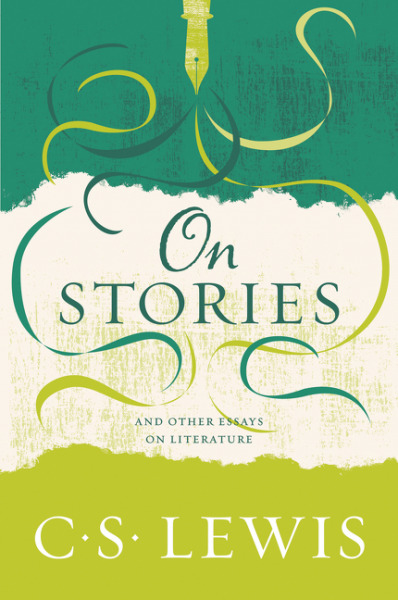
The Synopsis (Taken from Goodreads)
C. S. Lewis—the great British writer, scholar, lay theologian, broadcaster, Christian apologist, and bestselling author of Mere Christianity, The Screwtape Letters, The Great Divorce, The Chronicles of Narnia, and many other beloved classics—was a professor of literature at Oxford University, where he was known for his insightful and often witty presentations on the nature of stories. This collection assembles nine essays that encapsulate his ideas about fiction, including “On Stories,” “The Death of Words,” and “On Three Ways of Writing for Children,” as well as eleven pieces that were unpublished during his lifetime.
Personal Review
I rate this book four and a half stars, since there was only one thing I disliked about the book, which I will list first. Some of the writing style (for me, at least) was a little complex, and hard to understand. He mentions a lot of books and authors that I assume were probably pretty popular in his time and when he wrote the essays, but today only a few are still known. Also there were huge paragraphs, and sometimes I got confused and overwhelmed as to what he was saying. It could have just been me, but I did dock a half a star for the few times I did find myself confused and bored.
Besides that, however, I really loved the book and found it to be very intriguing. Five things in particular stuck out to me as a writer, and I will list those here.
First, in C.S. Lewis’ essay on writing for children, he mentions the morals in stories, which obviously applies not only to children stories, but all stories. However, a common misconception, especially among Christian writers, is that you must have a moral before you write a story.
When I was younger, I’d get ideas for a story before, but felt guilty because in that idea, I saw nothing blatantly “Christian” about it. Therefore, I’d try to shove good Christian stuff into it, inadvertently ruining the story.
C.S. Lewis addresses that very thing in this essay. He says to let the story tell its own moral. Oftentimes, as one writes, the moral will come through, just as it did with his Narnia stories. According to him, he had no intention of writing an allegory about Jesus in The Lion, The Witch, and The Wardrobe. The moral just naturally came into the story.
He also says if the story shows no moral, then don’t shove one in, because it will be noticed immediately and will be considered impertinent to the reader. Part of me is confused about his statement, since it’s nearly impossible for any written work not to have some sort of underlying slant or message (whether the author intends it or not), but, I believe he was referring to events like the above-mentioned example of my own life, with stuffing messages into a book which don’t naturally belong there.
In C.S. Lewis’ essay on science fiction, he mentioned yet another important point on the writing process, especially in regards to the science fiction and fantasy genres. Some people really enjoy speculative stories where everything is explained–how the characters received their special abilities, where the powers came from, how a story’s time machine actually works, etc.
But, in some stories (which are more my cup of tea), it’s not about HOW all the fantastical and futuristic elements work and their history. It’s just about imagining what it would be like. What would it be like to have the ability to create fire from your hands, or travel through time?
As C.S. Lewis mentioned it in his essay, “Never mind how they got there [the Moon]; we are imagining what it would be like [to be there].“
One of the longest essays in the book, On Criticism, was a really good essay and hit so many points on the head, especially concerning what an author is looking for in criticism of his writing from his critics. Honestly, I wish all literary critics (especially those who aren’t also writers) and even editors or others in a critique group setting would take the time just to read this essay because it hits so close to home with issues I’ve found, the biggest being the vague generalities the critics give.
For example, I’ve had some people say a passage felt “rushed”. Well, what about it is rushed? Give me the cause. Did the sword fight scene go too quickly? Was there not enough dialogue? Was the dialogue too choppy which gave the scene a sense of feeling rushed? Oftentimes I have to ask people for more clarity when they use such vague terms.
Also, something in which I myself have fallen into, is critiquing someone’s work by saying how you would write the book they’ve written. While I think it’s okay to tell someone you would probably rephrase this sentence or replace that word with this, trying to majorly change someone’s concept/meaning and/or flow of their story to fit what your ideal image of the book is not helpful critiquing.
Another thing I appreciated in this essay was his explanation (probably mostly to non-writers) that a book doesn’t just flow unimpeded from the author’s mind to the page. It’s a common misconception to believe writing a story is super easy work or at least comes super easily to those who are gifted authors. In fact, I believe this is the farthest from the truth.
Yes, there are times where the story flows uninhibited from the mind to the page. And there are times when a story or chapter comes super easily to an author. But for the majority of the time, writing is like any other occupation, with its ups and downs, good days and bad days. And sometimes, the bad days are more numerous than the good days. But like with other jobs, the writer will stick with it through thick and thin, and it’ll bring joy when it’s finally finished.
The final thing I liked was more of a small personality type thing. Again, in his essay on science fiction, C.S. Lewis is talking about criticism, and says not to criticize anything you can’t stand anyways. If you don’t like romance, for example, don’t criticize a romance book, because you’re already biased from the beginning.
Anyways, during that, he mentions he can’t stand anything remotely looking like a quasi love affair between children in literature, saying it embarrasses and nauseates him. I actually stopped reading and laughed at this point because he is the first person to ever actually put into words my extreme distaste for anything remotely appearing to be a “crush” or love interest between characters of non-marriageable age, especially teens.
(Because of that, I stopped to see what personality type people believed C.S Lewis was (since I wondered if he was my personality, an INTJ) and most people typed him as either an INFP, INTJ, or INTP. I personally believe he was either an INTJ or INTP. But I digress.)
Anyways, I enjoyed that little tidbit of getting to know a little more about C.S. Lewis as a person through his own writings. This book also has excerpts of how C.S Lewis came up with the Narnia idea, a conversation between him and some friends, his reviews on Tolkien’s work, and many other topics all relating to writing and its critiquing.
In all, if you’re a writer (especially of sci-fi or fantasy work) or a reviewer, critic, or editor, I would highly recommend reading this book.
Thanks for reading! Have you read one of C.S. Lewis’ books? Which is your favorite? Do you want to read this book? Let me know in the comments below! God Bless! ~ Kay Adelin
Discover more from Kay Adelin
Subscribe to get the latest posts sent to your email.

 Kay Adelin
I didn’t realize he didn’t intend to make Aslan an allegory of Jesus. that’s crazy. It’s ridiculously obvious!
LikeLiked by 1 person
You’d be surprised, I’ve actually heard of other people who didn’t notice it at first either!
LikeLike